What to wear on a Haleakala sunrise bike ride
A sunrise ride on Haleakala starts near freezing on the summit and ends in warm Upcountry sunshine a few hours later. Dress for both. This list covers what to wear, what to pack and what the bike shop already hands you.
Two climates in one morning
Bike Maui's listing puts the summit at 40–45 °F (4–7 °C) until the sun is up, and wind on the rim makes it feel colder. You stand still for a long time up there, waiting for first light.
A few hours later you roll through ranch land and eucalyptus, far below at a few thousand feet, where the air is mild and often warm. Good clothing for this ride comes off in layers, rather than one thick coat you will curse by mid-morning.
The daytime rides skip the summit and start at about 6,500 ft (1,980 m), so they are cooler at the top than the beach but never as raw as dawn on the crater rim.
Ten things to wear and pack
This list follows what the two companies ask for, plus a few things riders tend to wish they had brought. Everything fits in the backpack the shop lends you.
- Warm layers for the summit, such as a fleece or sweater, plus a beanie and a pair of gloves for the wait before dawn
- Closed-toe shoes, which both shops require; sneakers work well, sandals and flip-flops are not allowed
- Long pants or leggings, slim enough not to flap near the chain
- No rain gear of your own, since both shops provide it (Helly Hansen jacket and pants at Bike Maui, a wind and rain jacket with pants and gloves at Maui Sunriders)
- Sunglasses, for glare on the switchbacks and wind in your eyes
- Sunscreen, put on before you leave and topped up at the breakfast stop, since the sun is strong at altitude
- Water and snacks, which Bike Maui asks riders to bring themselves
- A card or some cash for the no-host breakfast on the sunrise rides, and for tips
- A phone on a strap or a small camera in a zipped pocket, never loose in a hand on the descent
- A T-shirt or thin top underneath everything, for the warm lower part of the ride
Bike Maui also asks for each rider's height when you book, so it can size the bike. Have it ready in feet and inches, and give it honestly, as the minimum is 4'10".
What the shop hands you
You do not need to travel with cycling kit. Bike Maui gives each rider a Kona mountain bike, a Bell helmet, Helly Hansen rain gear and a Dakine backpack. That is the setup on the sunrise self-guided ride at ~$273, our pick.
Maui Sunriders hand out bikes with front suspension and disc brakes, a full-face helmet (a regular one for advanced riders), a wind and rain jacket with pants and gloves, and a Dakine backpack with a lock and a route map. Gloves are the one warm item on that list.
Wear your own fleece under the rain jacket rather than over it. The shell keeps the wind out, and you can unzip it on the way down without stopping to repack.
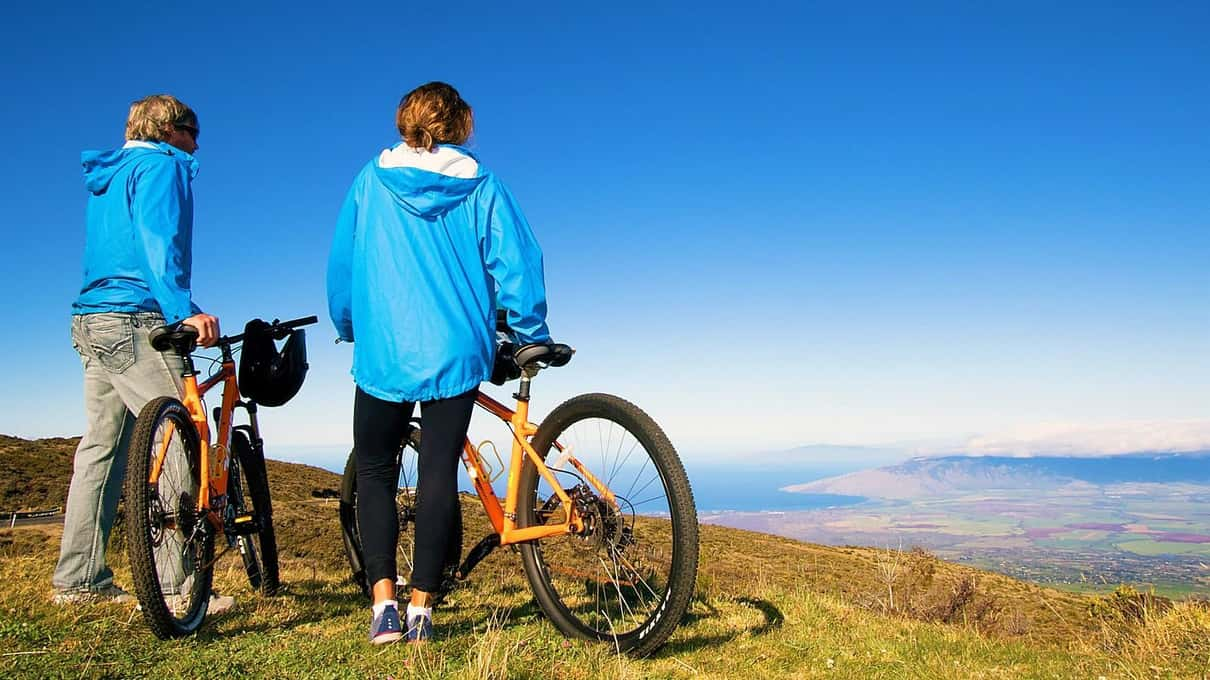
Dressing for a daytime ride
On Bike Maui's Express at ~$146 or the Maui Sunriders rides from Paia, you skip the cold rim. A light fleece or long-sleeved top under the provided jacket is usually enough at 6,500 ft.
Keep the closed-toe shoes and long pants anyway, since a slide on gravel hurts less through fabric. The sun is stronger on a midday descent, so sunscreen on the neck and the backs of the hands matters more than on a dawn ride.
The ride this list was built for
Bike Maui's sunrise self-guided tour: a van to the summit for dawn, park entry included, then the descent from 6,500 ft at your own pace with a breakfast stop. Bring the warm layers.
Shedding layers on the way down
The first stretch below 6,500 ft is often the coldest part of the ride itself, because you are moving fast and the sun is still low. Keep the gloves on until your hands stop aching.
Pull over on a straight, wide shoulder to change, never on a bend, and let the cars behind you pass first. Our bend-by-bend route guide shows where the road opens out, and the page on traffic and brakes covers stopping safely.
Whatever comes off goes in the backpack. A light packable fleece earns its place here, as a bulky hoodie will not fit beside the rain pants and a water bottle.
Glasses, hair and the helmet
If you wear prescription glasses, keep them on and bring a soft case for the backpack. Sunglasses that fit over them, or clip-on lenses, save you swapping pairs on the roadside.
Long hair is easiest in a low braid or ponytail that sits under the helmet strap. A thin beanie can stay on under a regular helmet, but ask the shop staff to check the fit, and take it off if the helmet rocks.
Contact lens wearers sometimes find the wind dries their eyes on the descent. Wraparound sunglasses help, and a small bottle of eye drops weighs nothing in a pocket.
What to leave at the hotel
Big bags have no place on a bike, and there is no locker on the road. Leave the beach bag behind, along with anything you would hate to drop in a ditch.
Skip loose scarves and wide skirts, which can catch on the wheel. Your own helmet is also unnecessary, since both companies fit you with one at the shop.
If you plan to stay down in Paia or Makawao afterwards, a pair of sandals in the car makes the walk around town nicer. Our page on where the rides end covers the towns, and the seasons guide says how much colder winter dawns get.